CS2 Tips and Guides for Beginners to Improve Faster
Most CS2 beginners improve slowly not because they lack aim, but because they practice the wrong things or practice correctly without structure. Knowing where to direct your attention in the early hours saves weeks of stagnation and builds habits that carry you up the skill ladder consistently. SkinKings offers a range of guides and resources that complement the fundamentals covered here and are well worth exploring alongside your practice sessions.
This guide covers the most impactful areas of improvement for new players: mechanics and settings, game sense and decision-making, and communication with teammates. Each section includes actionable tips you can apply immediately rather than abstract concepts that only make sense after hundreds of hours.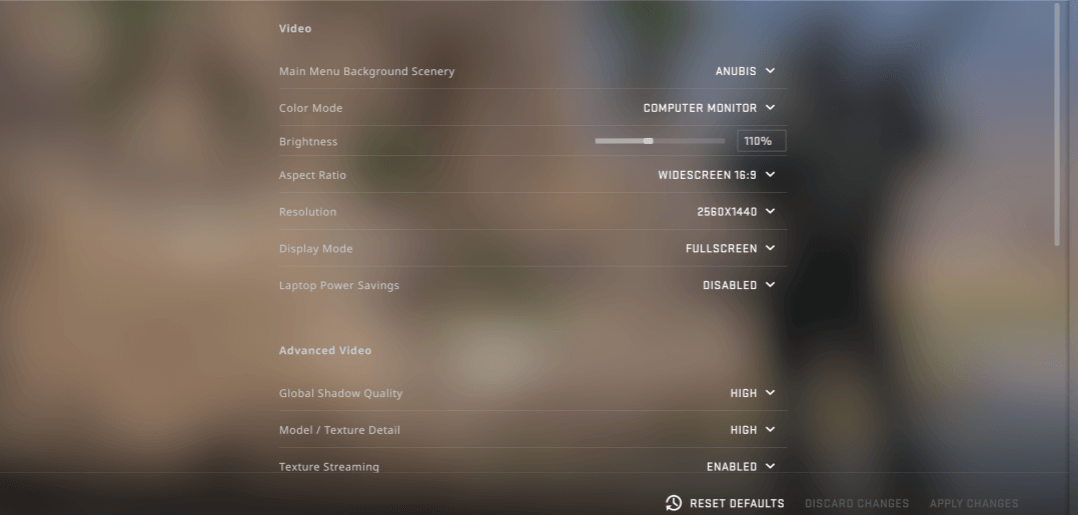
Aim and Mechanics
Raw aim is not the first thing a beginner should focus on, but it is the foundation that every other skill sits on top of. The most effective approach is to build sound mechanical habits before grinding hours in aim trainers, because practicing with incorrect settings or bad posture will reinforce mistakes rather than correct them.
Settings That Actually Affect Your Performance
Your mouse sensitivity has a larger impact on your early improvement than most players realize. A sensitivity that is too high makes precise tracking difficult; one that is too low limits your ability to react in close-range situations. A good starting range for most players is 400 DPI with an in-game sensitivity between 1.8 and 2.5, producing an eDPI between 720 and 1000. Set your resolution to the one your system runs at a stable high frame rate and keep it consistent - switching regularly resets any muscle memory you have built. Turn off raw input acceleration and enable raw input from the options menu.
Aim Training
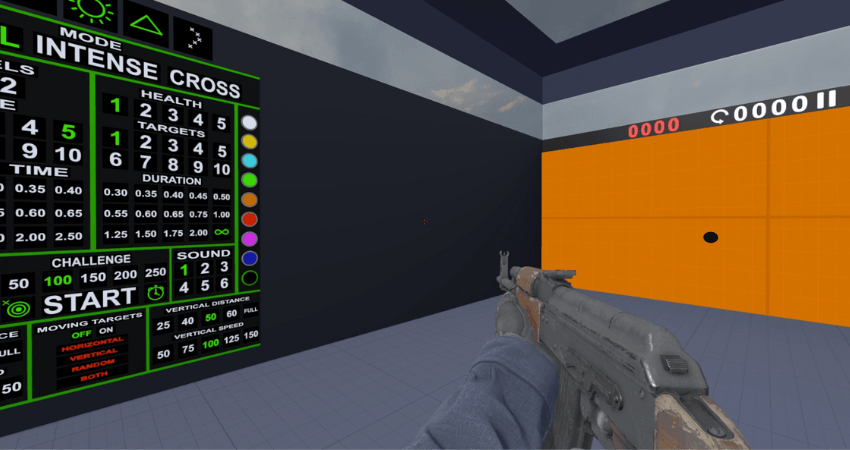
Community aim training maps inside CS2 workshop mode are one of the best free tools available to beginners. Spend ten to fifteen minutes per session on a dedicated flicking or tracking map at your match sensitivity before queuing. The goal is not to score highly on the map - it is to warm up your hand-eye coordination for the specific demands of CS2. Complement in-game warmup with ten minutes in deathmatch before competitive play to get comfortable with real movement and pressure before a match begins.
Game Sense and Decision-Making
Game sense is the ability to predict what is happening - and what is about to happen - based on available information. It develops through active observation rather than passive play, and it is where the majority of a beginners early gains come from, because good decisions produce more impact than improved reflexes in most situations below the intermediate level.
Reading the Minimap
The minimap tells you the position of every teammate, the direction they are moving, and where gunfire was last detected. Most beginners look at it only occasionally, but developing a habit of checking it every five to ten seconds gives you a near-constant picture of the round state. Use minimap data to predict rotations, identify when a site is likely to be free, and avoid walking into a position that your team has already established is contested.
Information Gathering Before Peeking
A common mistake in early play is peeking corners immediately, before establishing any read on whether an enemy is there. Before taking a peak, ask yourself what information you actually have: has anyone reported an enemy in that area, have you heard footsteps, has utility been thrown that confirms or denies a presence? Peeking without information converts what could be a prepared duel into a coin flip. The following habits support better information gathering before every engagement:
- Listen for footsteps before opening a door or crossing an open area
- Use the chat or voice to relay what you hear, even if you cannot see the enemy
- Watch the kill feed - it tells you where fights are happening in real time
- Note which bombs have been dropped or planted - it dictates where the round is going
- Hold angles rather than pushing them when you have the defenders time advantage
Communication and Teamplay
CS2 is a team game, and effective communication is one of the most underrated skills a beginner can develop. Players who call information clearly, even at a basic level, consistently win more rounds than those with better aim but no callouts. You do not need to be an expert to provide valuable information - you just need to relay what you see, hear, and know at the right moment.
What to Call and When to Call It
A useful callout includes: the location using the correct map name, the number of enemies if visible, and whether they have utility or armor. You do not need all three every time - even calling the location alone is far more useful than silence. Keep calls short and factual. Replace 'I think there might be someone on the left' with 'Two B apartments, no flash seen.' The table below shows examples of the difference between weak and strong callouts:
|
Situation |
Weak Callout |
Strong Callout |
|---|---|---|
|
Spotted an enemy |
Someones over there |
One long A, no armor visible |
|
Heard movement |
I heard something |
Footsteps mid, top of catwalk |
|
Bomb planted |
They planted |
Bomb down B site, short side |
|
Teammate eliminated |
I died |
Down B long, two alive pushing |
Playing Around Team Economy
One of the most overlooked communication habits for beginners is coordinating around the teams economy. Before buying each round, check how much money your teammates have. If most of the team is saving, buying alone gives your team one rifle and four pistols - an arrangement that typically loses to any organized buy. Develop the habit of typing your money in team chat at the start of each round and asking whether the team is buying or saving, especially when a round has just been lost.
Improvement in CS2 is not a single breakthrough - it is the compounding result of small, consistent adjustments across mechanics, awareness, and communication. Pick one area from this guide to focus on per session, apply it actively rather than passively, and review your rounds to see whether the habit actually changed your decisions. Players who reflect on their gameplay improve at a measurably faster rate than those who simply play more hours.